
Forthcoming
Australyichthys gen. nov. (Teleostei, Syngnathidae), a lost mesophotic lineage from southern Australia, with description of A. aegis sp. nov. and reclassification of Hippocampus minotaur and H. paradoxus
DOI:
https://doi.org/10.66264/y1ffbcwbKeywords:
Lost species concept, Temperate mesophotic ecosystems, Great Southern Reef, Southern Australia, Taxonomy, Systematics, PhylogenomicsAbstract
Australyichthys gen. nov. is described as a new genus of Syngnathidae (seahorses, pipefishes, seadragons, pipehorses and pygmy pipehorses) endemic to temperate mesophotic habitats of southern Australia and erected to include A. minotaur comb. nov. and A. paradoxus comb. nov., together with A. aegis sp. nov. The genus occurs at depths of 50–124 m within a mesophotic zone characterized by reduced light penetration and structurally complex benthic habitats. The included taxa possess hippocampiform features including a ventrally angled head, a fully enclosed brood pouch, and a prehensile tail, but are distinguished by a consistent osteological combination. Micro-computed tomography reveals an elevated, anteriorly inclined supraoccipital, a reduced anterior nuchal plate not forming a coronet, and unfused inferior trunk plates lacking a continuous ventral ridge. The external morphology is comparatively unsegmented, with subtle dermal lobulation contributing to a fleshy habitus. A derived ventral trunk complex is present, composed of anterior and posterior ventral elements flanking a median anal pterygiophore, homologous to the anal-fin pterygiophore complex of Hippocampus but reorganized into a novel ventral support architecture not observed elsewhere in Syngnathidae. Phylogenomic analyses of ultraconserved elements recover Australyichthys within Haliichthyini, the sister clade to Hippocampini, indicating that the hippocampiform body plan arose independently of Hippocampus and reflects convergence rather than shared ancestry. The genus is represented by eight specimens collected incidentally over nearly eighty years, with no collections within the last two decades and no verified in situ observations, and therefore meets the criteria of a lost taxon. Its rarity, restricted depth range, and predominant occurrence in mesophotic habitats underscore the need for targeted surveys and formal conservation assessment.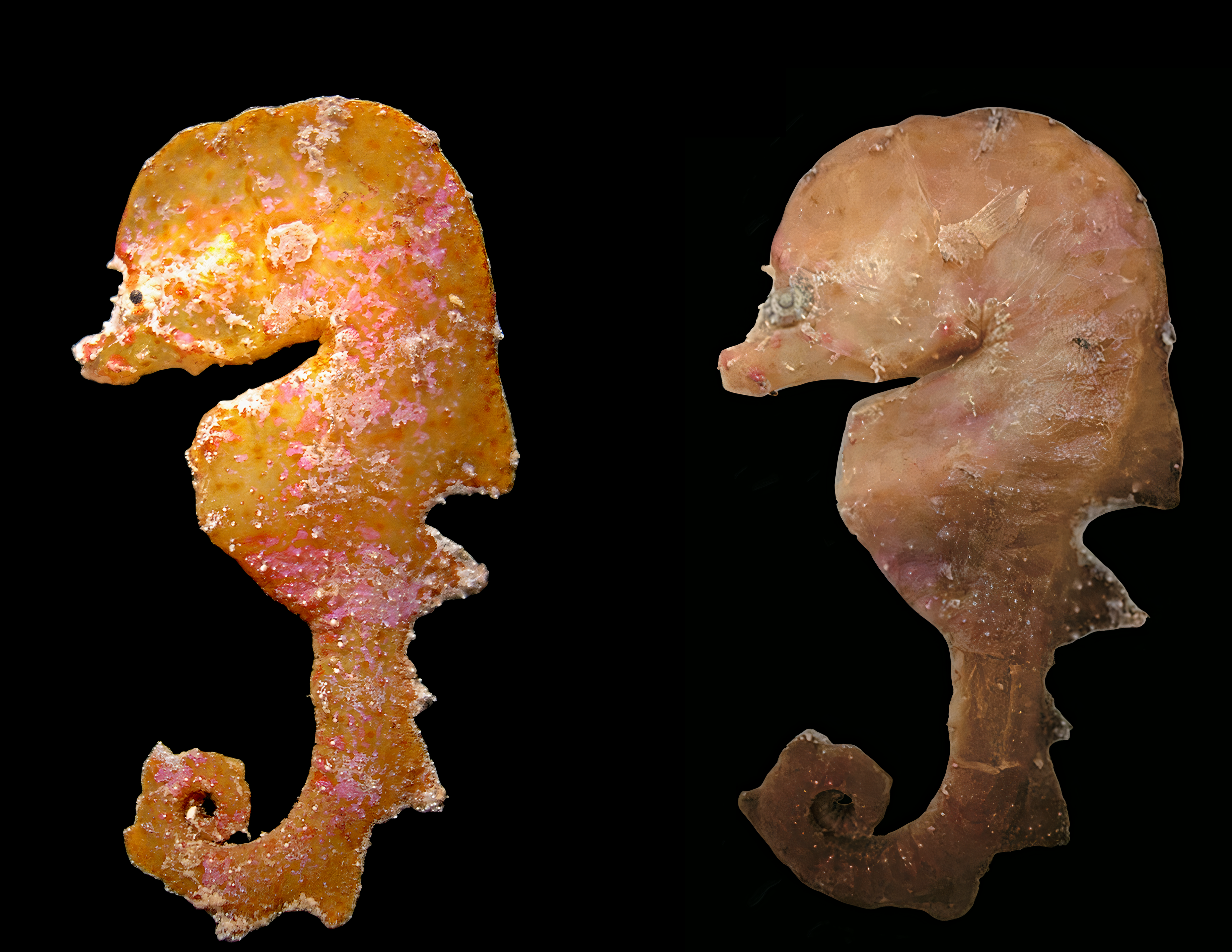
Downloads
Additional Files
Published
2026-07-29
How to Cite
Short, G., Foster, R., Gomon, M., Bassham, S., Small, C., Hamilton, H., … Hay, A. (2026). Australyichthys gen. nov. (Teleostei, Syngnathidae), a lost mesophotic lineage from southern Australia, with description of A. aegis sp. nov. and reclassification of Hippocampus minotaur and H. paradoxus. Journal of Lost Species, 1. https://doi.org/10.66264/y1ffbcwb
Issue
Section
Reports
License
Copyright (c) 2026 Graham Short

This work is licensed under a Creative Commons Attribution 4.0 International License.
All articles in the Journal of Lost Species are published under the Creative Commons Attribution 4.0 International License (CC BY 4.0), which permits unrestricted use, distribution, and reproduction in any medium, provided the original authors and source are credited. Authors retain copyright and grant the journal the right of first publication under this license.